
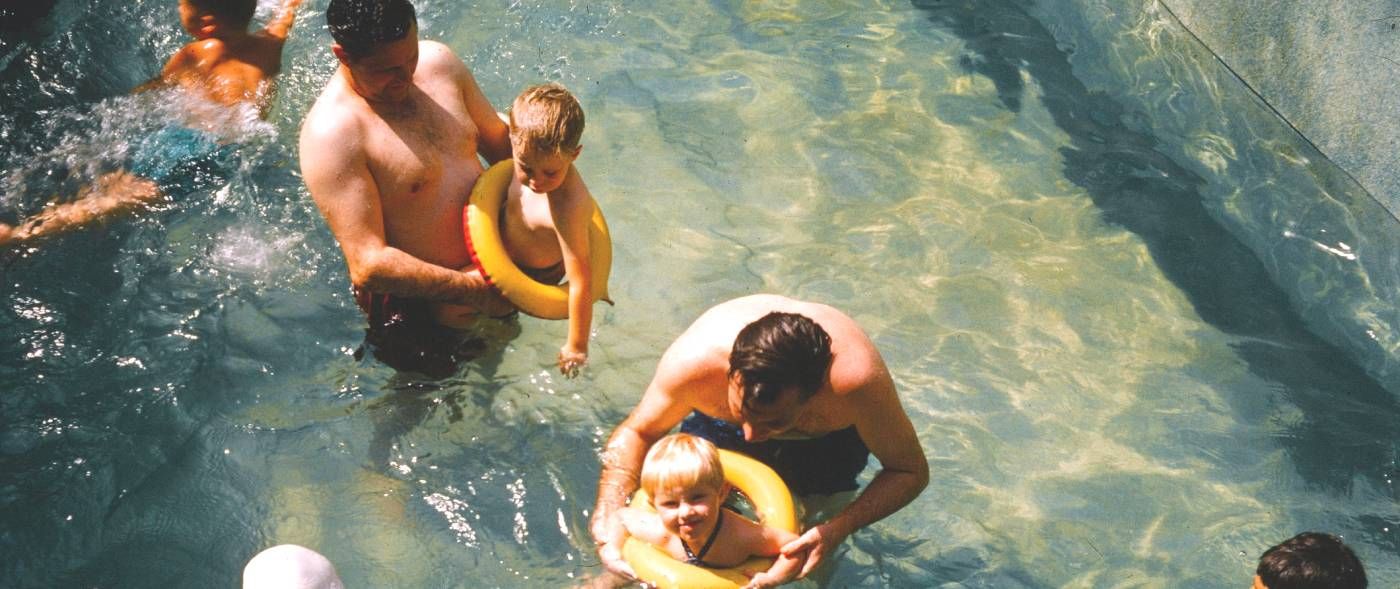
For many parents in Northeast Florida, enrolling a child in swim lessons feels like checking an important safety box. Once your child learns how to tread water or doggy-paddle, it is easy to feel like the biggest risks are behind you.
The reality is much more complicated.
Living in Saint Johns County means water is the backdrop of our everyday lives. From the pools of our sprawling master-planned communities to the beaches of St. Augustine and the tranquil stretches of the Matanzas and St. Johns Rivers, aquatic environments are everywhere. Because water is an inescapable part of our local lifestyle, teaching your child to swim is only one layer of protection. When an unexpected water emergency unfolds, parents are the actual first responders. A parent's own comfort, survival skills, and confidence in the water can mean the difference between a close call and a devastating tragedy.
Water safety is not just a youth skill. It is a family skill.
The Hidden Gap in Adult Swim Skills
Many adults assume they are competent swimmers simply because they can hang out on a pool float or comfortably doggy-paddle to the edge. However, research highlights a massive disconnect between feeling relaxed in calm water and actually being equipped to handle a life-or-death crisis.
Data from the American Red Cross reveals that while nearly 80% of adults in the United States claim they can swim, only 56% can successfully perform the five basic water competency skills necessary for survival in an emergency:
Entering water that is over your head and resurfacing safely.
Floating or treading water for at least one minute.
Turning around in a full circle to locate an exit point.
Swimming 25 yards (the length of a standard recreational pool) to safety.
Exiting the water completely without the assistance of a ladder or steps.
Consider this critical question: If your child unexpectedly slipped into deep water or got caught in a sudden current, do you possess the physical endurance and swimming capability to jump in, manage a struggling child's weight, and secure both of your lives? This isn't about creating unnecessary fear; it's about realistic family preparation.
Why Saint Johns County Hazards Demand Adult Competency
Our beautiful local geography means that avoiding water is practically impossible once you have kids. Between weekend beach trips, neighborhood pool playdates, and historic district hotel stays, exposure is continuous.
In our rapidly growing region, families are constantly navigating unique aquatic environments:
Massive community amenity centers and neighborhood splash parks.
Coastal vacation rentals and hotel pools along Anastasia Island.
Boating, kayaking, and tidal currents along the Intracoastal Waterway.
Thousands of neighborhood retention ponds.
Local history shows that water crises happen right where we live and vacation—often in the blink of an eye. The heartbreaking incident at a St. Augustine hotel pool, where an entire visiting family tragically drowned because none of them knew how to swim, underscores a vital truth: an emergency can instantly overwhelm multiple non-swimmers if an adult lacks basic water competence.
Even in heavily populated spaces, dangers persist. A frightening near-drowning of a 6-year-old at the SilverLeaf Amenity Center in St. Augustine serves as a stark reminder. The child was found floating in an un-lifeguarded area under a bridge, and it was only the heroic, rapid response of an off-duty nurse performing immediate CPR that saved his life.
When a child struggles, parents are almost always the closest people available. An adult who is truly competent and confident in the water is positioned to:
Maintain emotional control and prevent contagious panic.
Spot the silent, subtle signs of drowning immediately (real drowning is rarely loud, splashy, or dramatic, it is a quiet, rapid event).
Executing a safe rescue without becoming a second victim.
Supervise visually with absolute confidence and zero distractions.
Children Mirror Their Parents' Relationship with Water
Children are hyper-aware of the adults around them. If a parent exhibits subtle anxiety near a pool, refuses to submerge their head, or completely avoids getting into the water during family outings, kids internalize those fears. This hidden anxiety can slow down a child's progress and confidence during their own youth swim lessons.
Conversely, when children watch their parents interact with the water calmly, respectfully, and skillfully, it creates a positive feedback loop. It reinforces their own water comfort and accelerates their ability to learn.
You don't need to be an elite competitor to protect your household. You simply need to eliminate water phobia, master basic survival strokes, and understand how water behaves. For parents whose kids are already taking youth lessons, leveling up your own swim skills is the most logical step to ensure your entire family is synchronized in the water.
Evolving Florida Safety Laws
Florida lawmakers are pushing harder than ever to address the state's child drowning rates. Recent legislative efforts, including proposed Senate Bills 606, 608, and 610, look to mandate strict, multi-layered safety features (such as four-foot perimeters, self-latching gates, and door alarms) for all residential pools and vacation rental properties sold or registered across the state, alongside introducing widespread drowning prevention education for new parents.
Physical barriers and updated legislation are massive wins for community safety. However, a fence can't swim. The ultimate layer of protection for any family will always be active human supervision and real aquatic capability.
What to Do During a Water Emergency
When seconds count, knowing exactly how to execute a response is life-saving. If you find yourself facing a water crisis, memorize these rules:
Stay Calm: Children mirror adult panic. Keeping your composure allows you to think logically and act systematically.
Call for Help Immediately: Shout for nearby assistance, assign someone to call 911, and get emergency medical services moving without a single second of delay.
Reach or Throw, Don't Go: Many adult drowning fatalities occur because a protective parent instinctively jumps into deep water to save a child without realizing how physically exhausting it is to manage a panicked, thrashing swimmer. Always look to extend a pool skimmer, throw a life ring, or use a flotation device first.
Learn CPR: Because drowning is an oxygen-deprivation emergency, immediate CPR can preserve brain function and save a life while rescue crews are en route to your community or home. It is a vital skillset for every parent, grandparent, and local caregiver.
Always Seek Medical Care Afterward: Even if a child swallows water but seems completely fine after a coughing fit, an immediate medical evaluation at a facility like Wolfson Children’s Hospital is absolutely non-negotiable. Microscopic amounts of water trapped in the lungs can cause delayed, life-threatening respiratory complications hours after leaving the pool.
It Is Never Too Late to Gain Water Competence
Countless adults skip out on swim lessons because they feel self-conscious, assume it's a skill you can only master in childhood, or believe it's "too late" to start. The truth is that millions of adults across the country grew up without formal aquatic instruction.
Adult swim programs aren't designed to judge you or turn you into a speed swimmer. Under the local leadership of franchise owner Sindy Fernando, our programs are structured to meet you exactly where you are. We focus on dismantling deep-seated anxieties, teaching core breathing techniques, and giving you the structural mechanics required to safely enjoy the Florida lifestyle with your family.
Investing in your own aquatic education means giving yourself the ultimate gift: peace of mind whenever your family is near the water.
Water confidence shouldn't belong to just the kids; it belongs to the whole family.
Take the Next Step in Protecting Your Family
Sign up for Adult Swim Classes with Hudson Valley Swim Saint Johns by visiting our Registration Portal or speak directly with our local team at (904) 442-8288. To learn more about our local schedules and community safety programs, visit our website at saintjohns.hvswim.com.